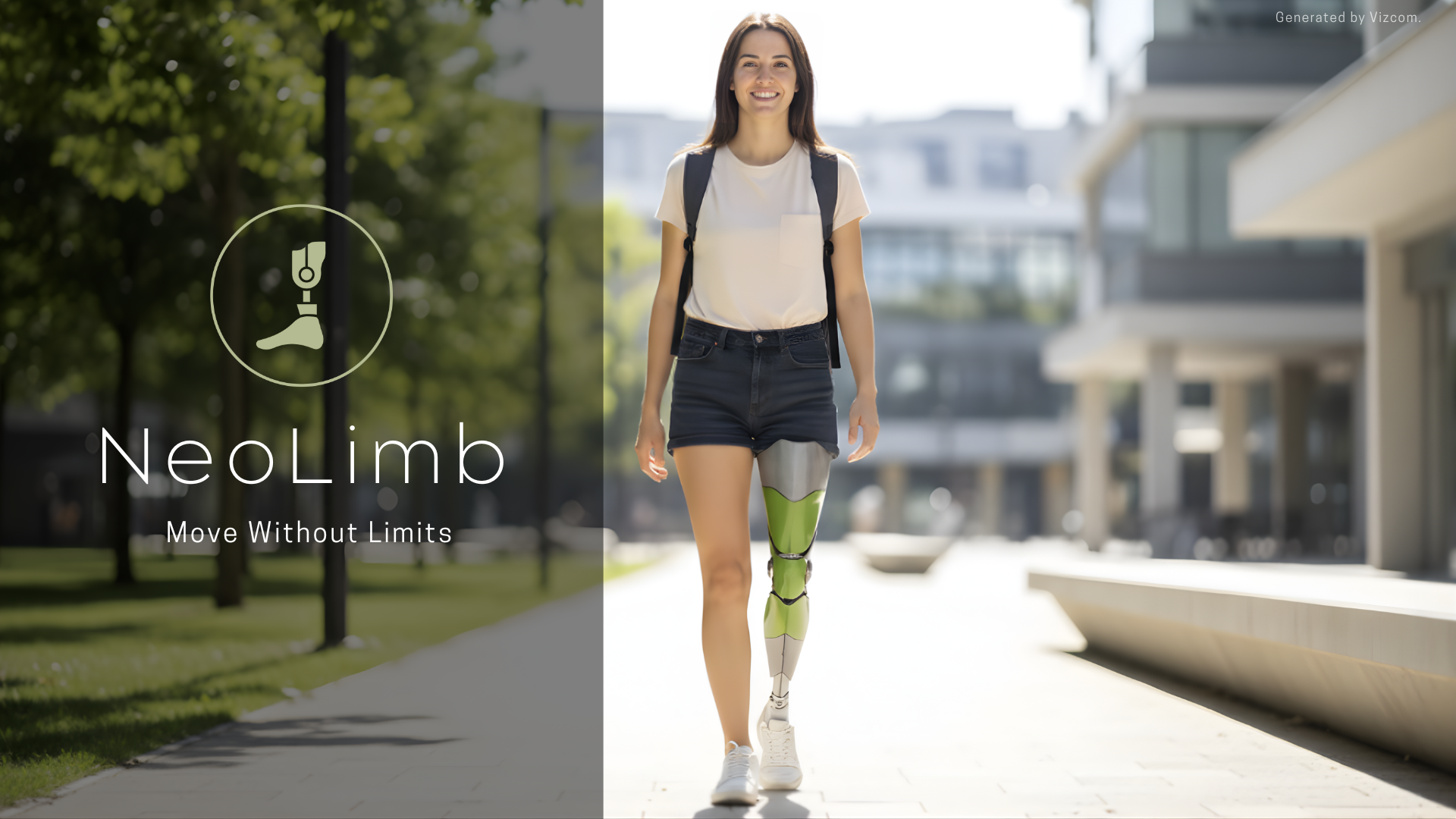
Project Summary
This was a semester-long project in collaboration with the Mobility Independence Foundation (MIF), where we developed a design solution aimed at improving accessibility and independence for individuals with mobility disabilities.
Research
Researched gaps in current lower-limb prosthetics, identifying key issues in comfort, natural movement, and personalization. We wanted to apply these insights to develop a more human-centered, adaptable design solution.
Problem Statement
Current lower-limb prosthetics prioritize function over user experience, resulting in discomfort, limited adaptability, and a lack of personalization for users.
Color Palette
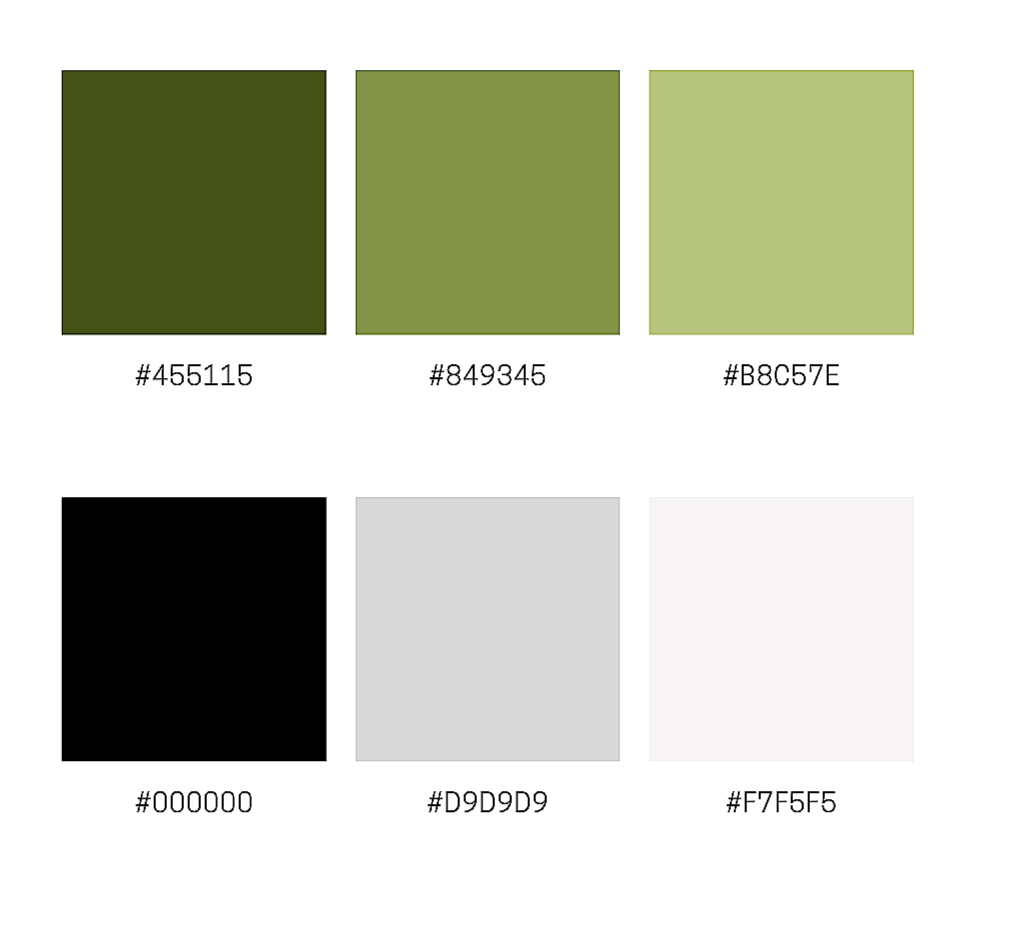
Green is a color that symbolizes growth and balance, which perfectly aligns with our prosthetic design's message.
It represents the next wave of innovation, offering a new perspective on prosthetics.
Green signifies balance, as our design adapts to the user, rather than the user having to adapt to it.
Neolimb
Comes from the greek word “NEO”, meaning new or revived, reflecting the project’s goal of redefining prosthetic mobility through innovation, adaptability and human-centered design.
The logo represents a prosthetic leg and conveys the intended message clearly. Its design is straightforward and uncluttered and the font is clean and easy to read.
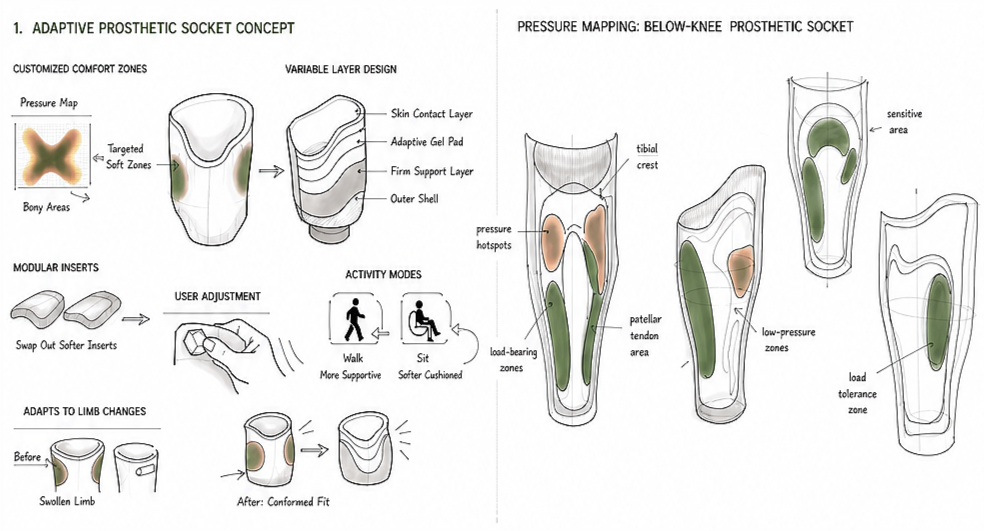
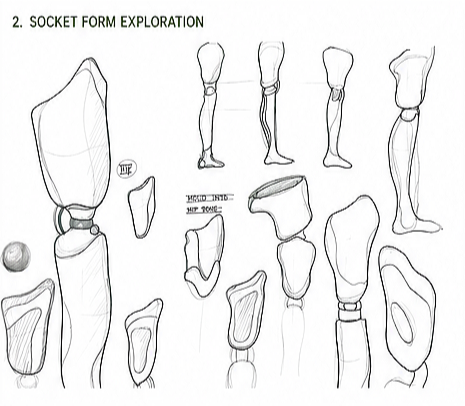
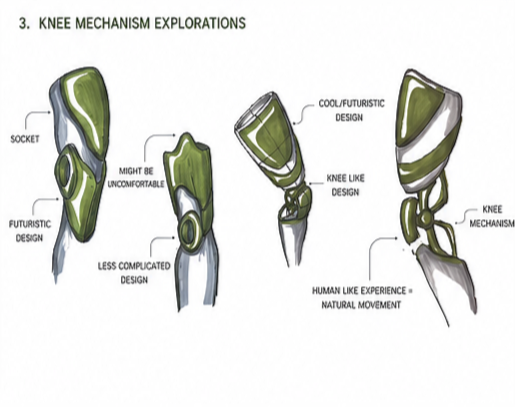
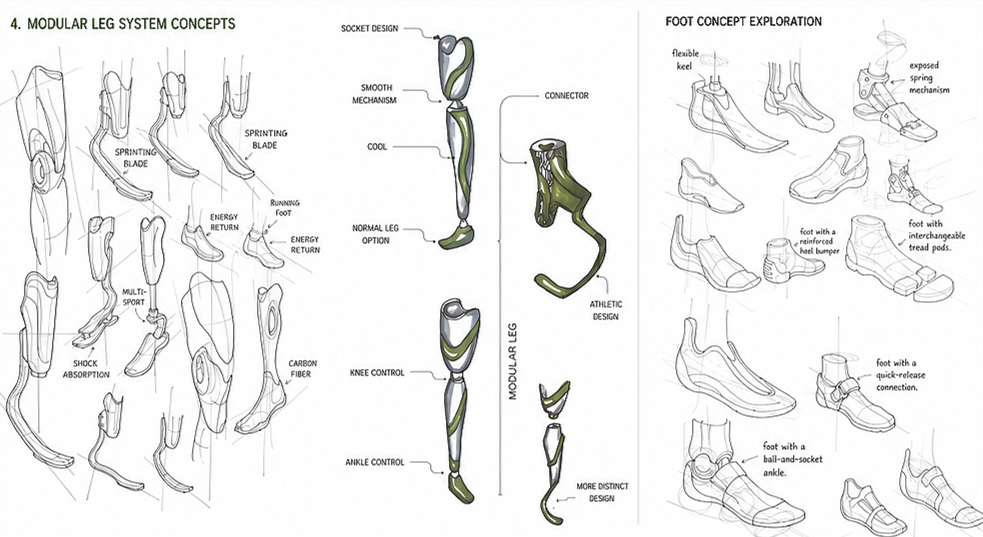
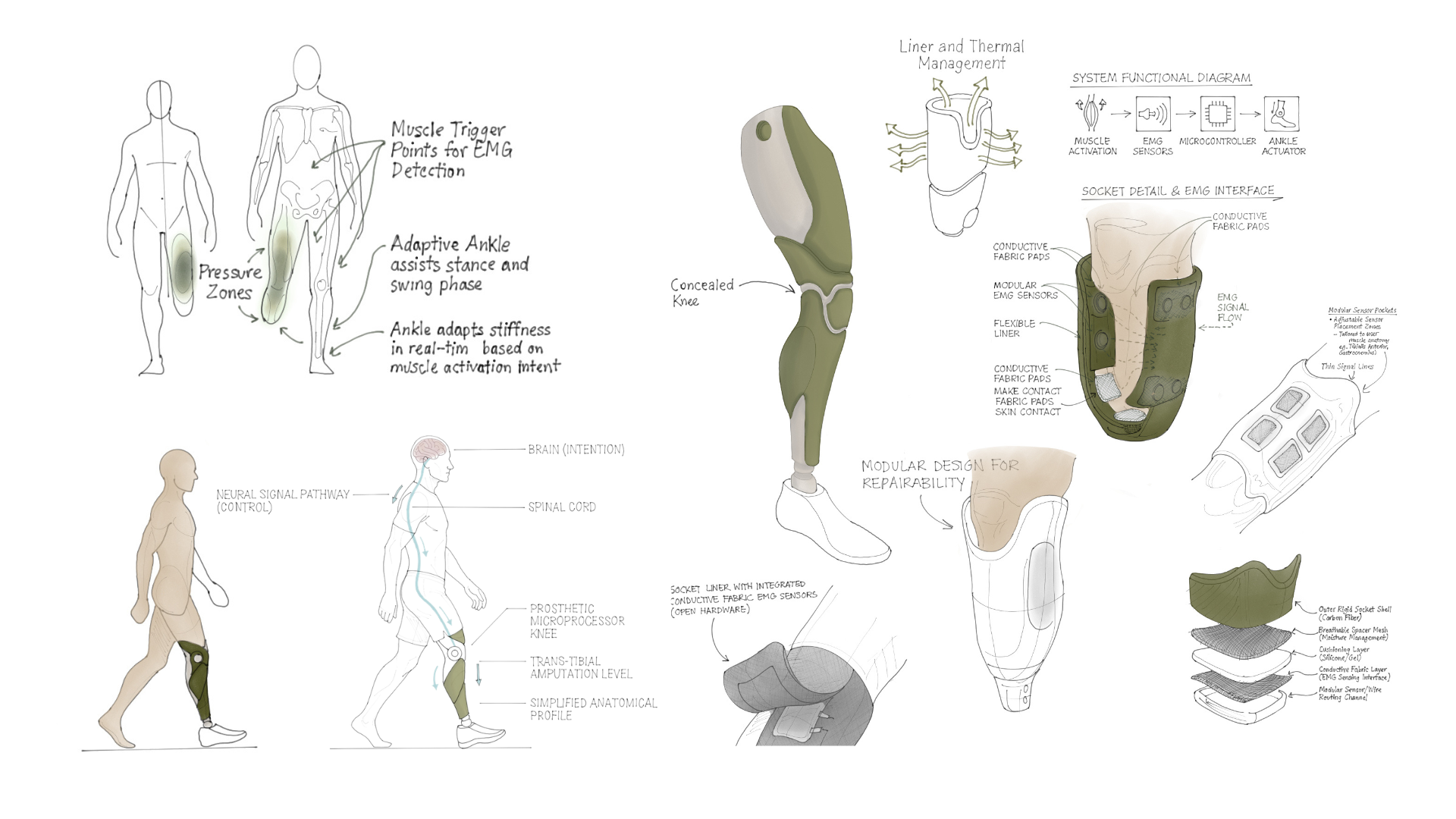
Concept sketches exploring adaptive prosthetic design, focusing on comfort, modularity, and natural movement.
Through sketching the design focuses on enhancing at the socket interface, enabling adaptability to limb changes, a natural more human-like movement experience with personalization.
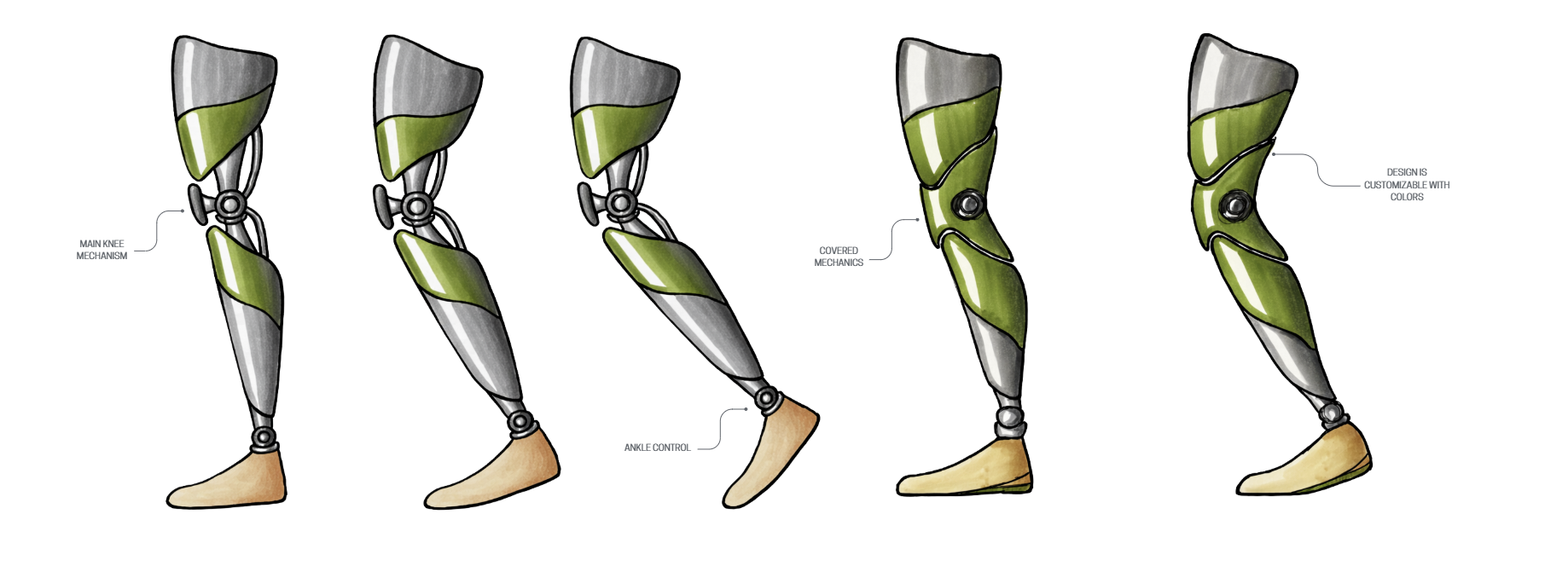
Final ideation refined a modular prosthetic system emphasizing comfort, adaptability, and natural movement.
The design integrates adjustable components and improved pressure distribution to better support real user needs.
This exploration combined biomechanical research with concept ideation to develop an adaptive prosthetic system focused on comfort, modularity, and natural movement.
EMG integration, pressure mapping, and repairable components guided the evolution of the final concept.
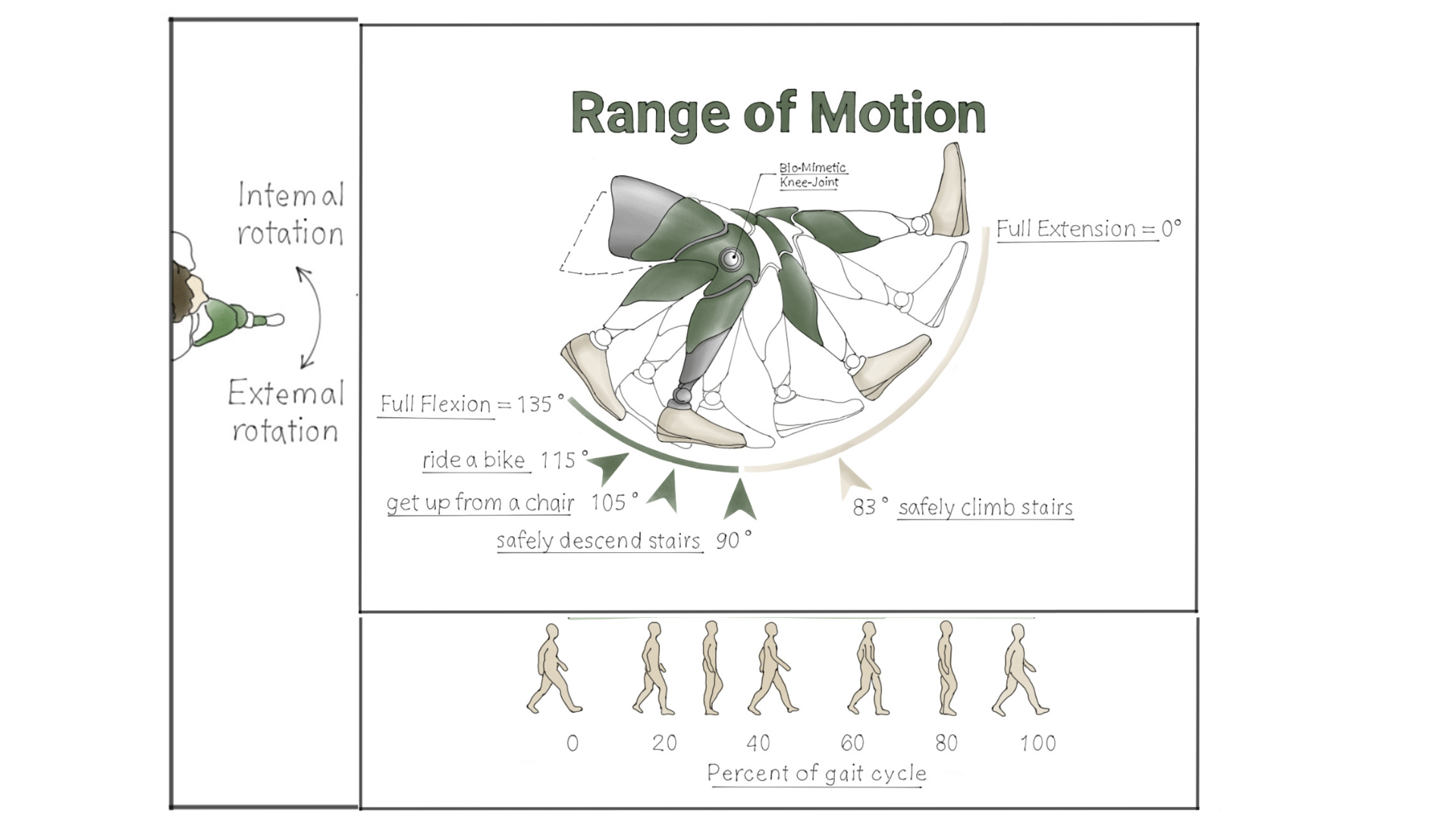
Investigated prosthetic range of motion through gait studies and joint articulation sketches to create a system that supports smoother, more natural lower-limb movement during walking and activity.
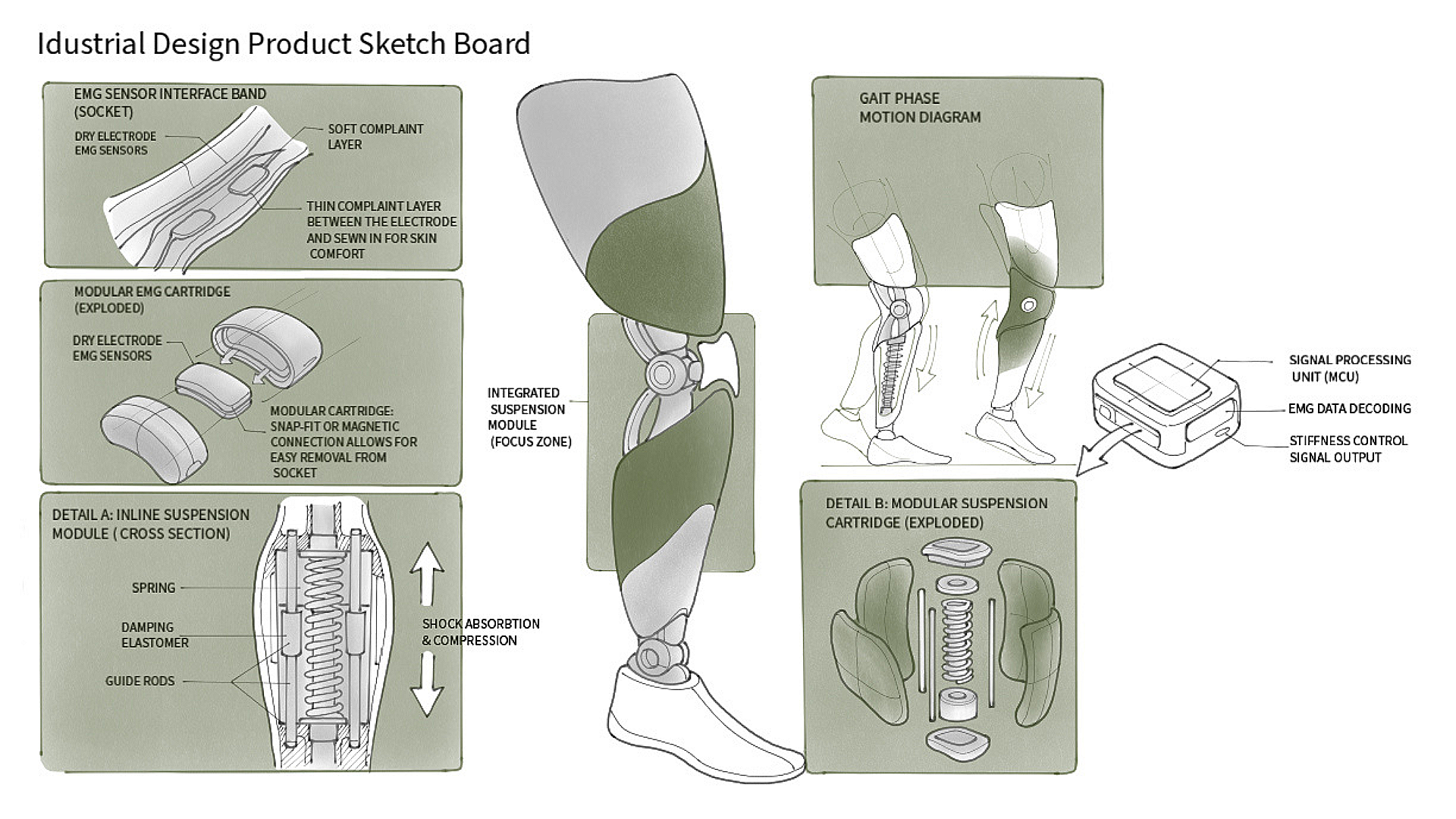
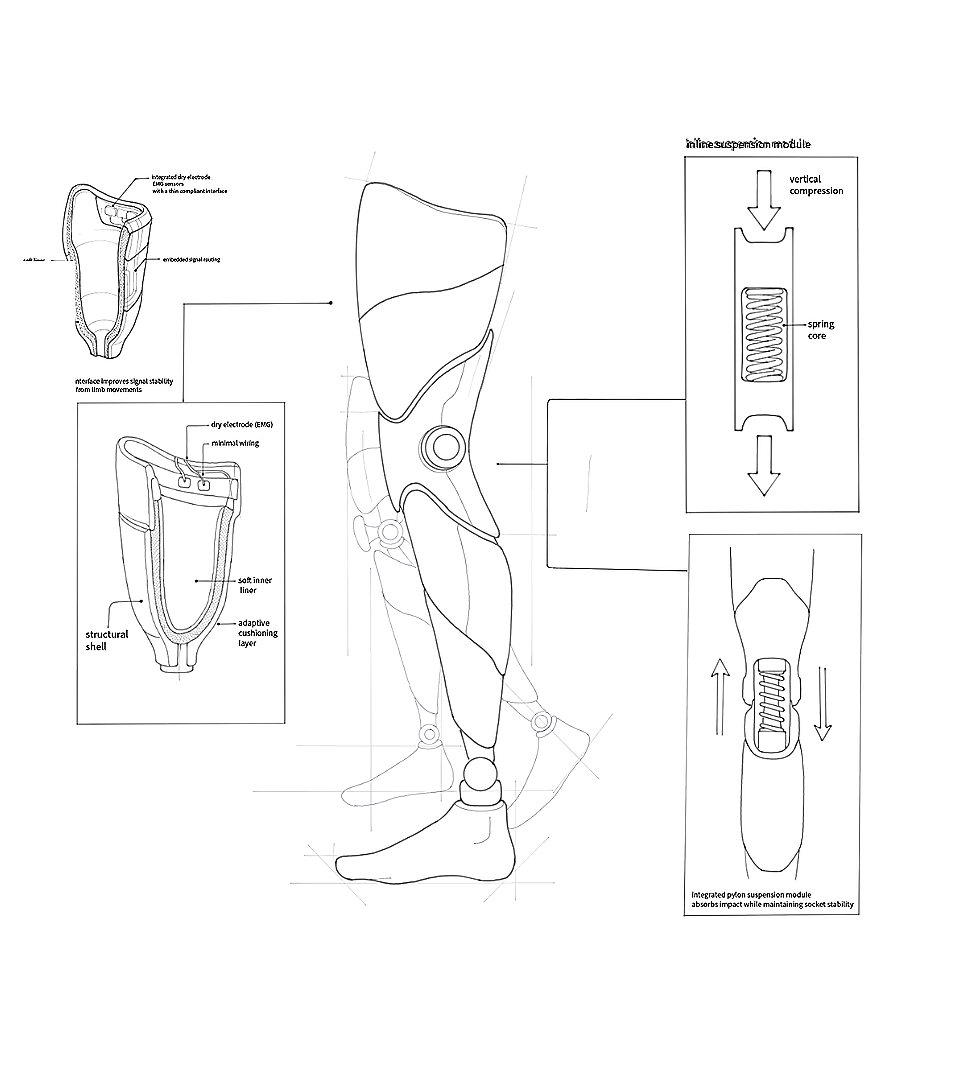
Explored a modular prosthetic concept integrating adaptive suspension and EMG-responsive systems to improve comfort, shock absorption, and natural movement.
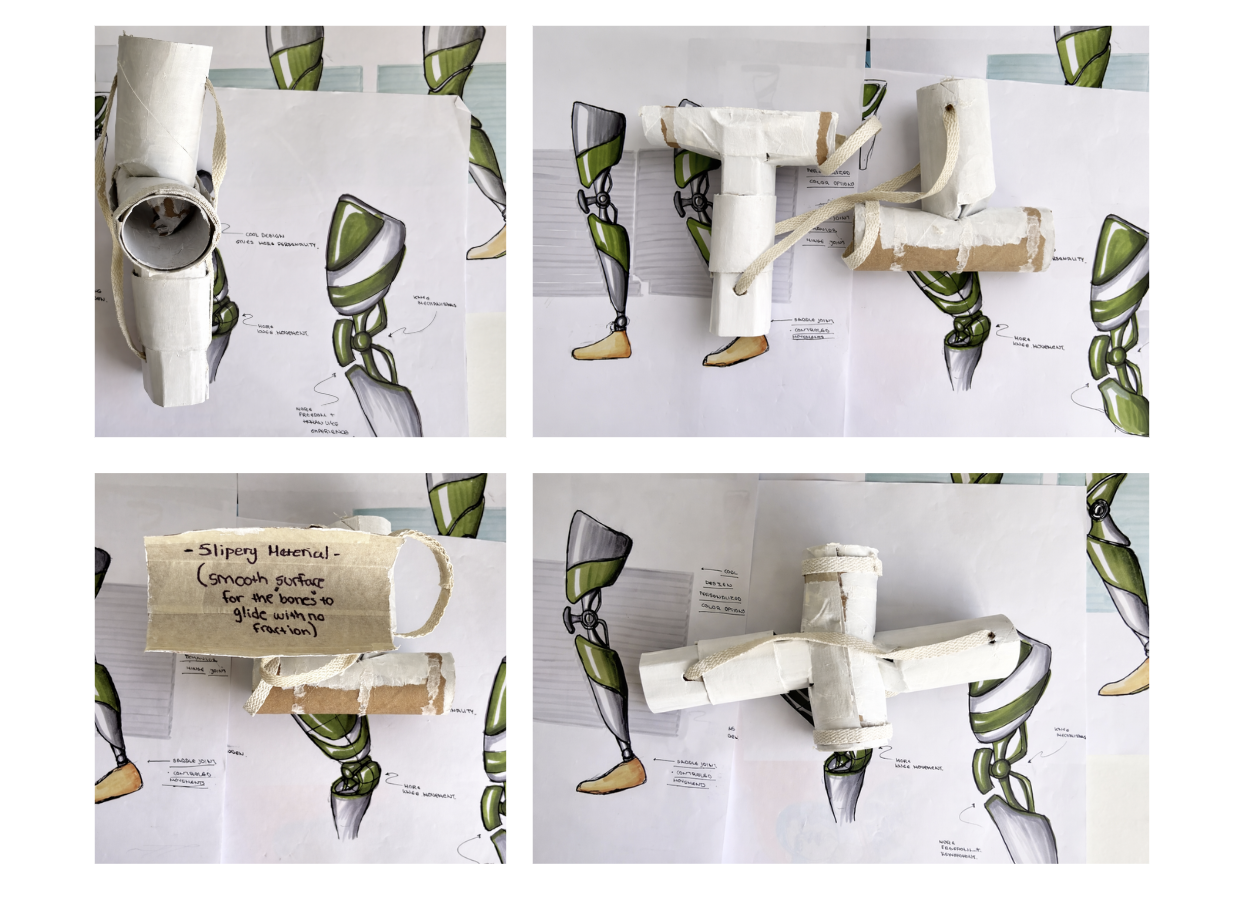
This prototype demonstrates the knee joint mechanism using kitchen paper rolls to mimic muscles and bones.
Tape indicates a smooth material for representation of the cartilage for smooth movement.
While laces symbolize the muscles that stabilize the bones.
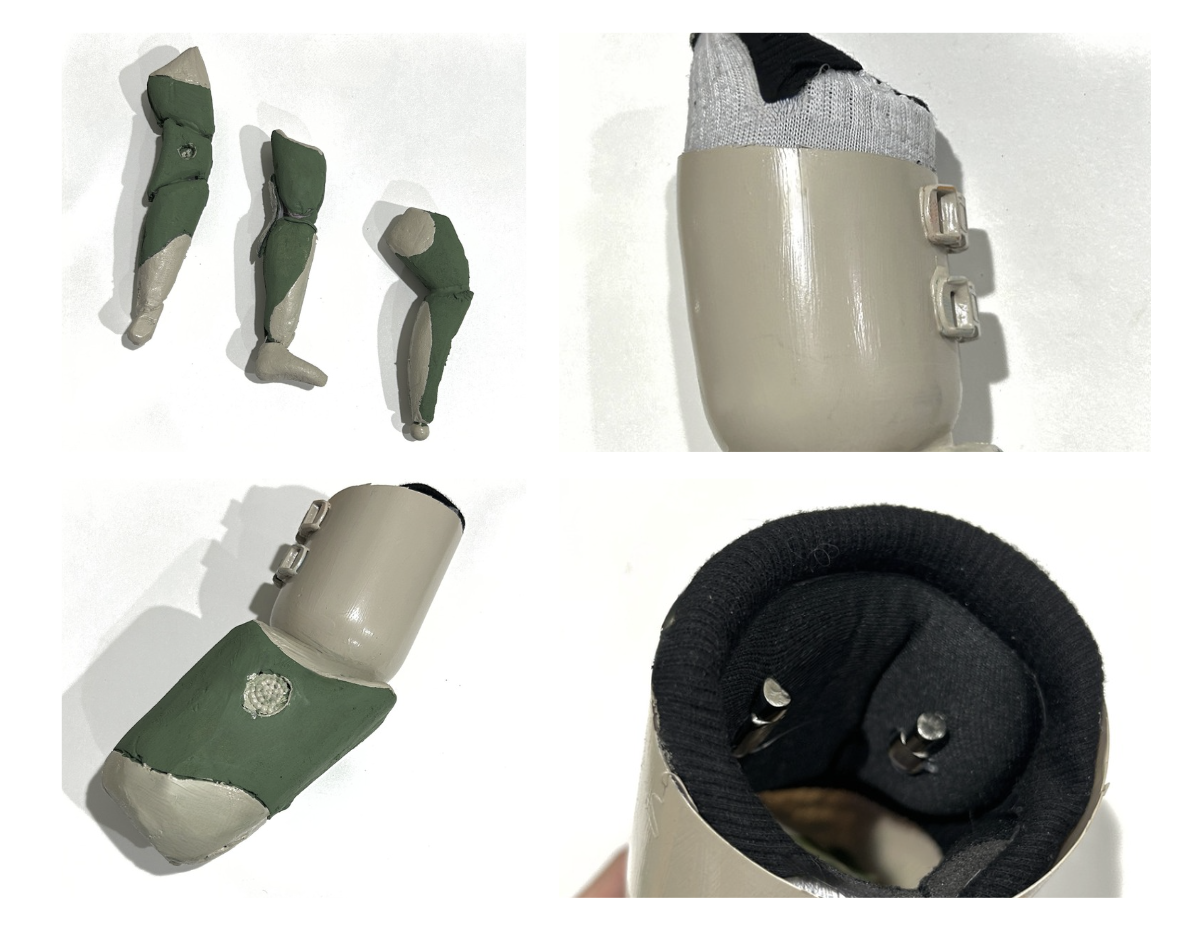
This prototype focuses on the socket as the key connection between the user and prosthetic.
It features a secure, comfortable design with an adjustable closure and soft interior materials for improved wearability.
Integrated EMG sensors detect muscle signals for more natural and responsive movement control.
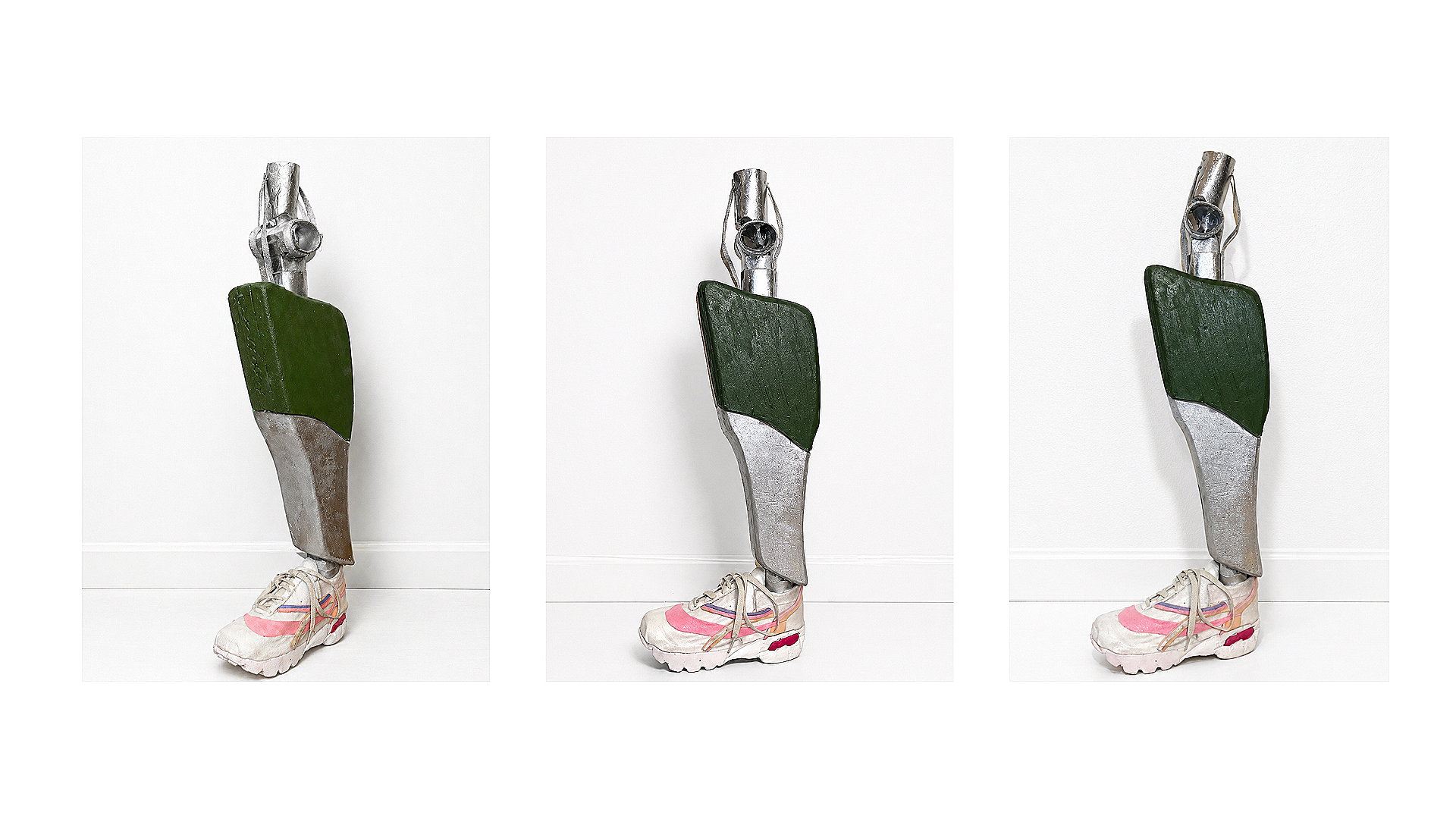
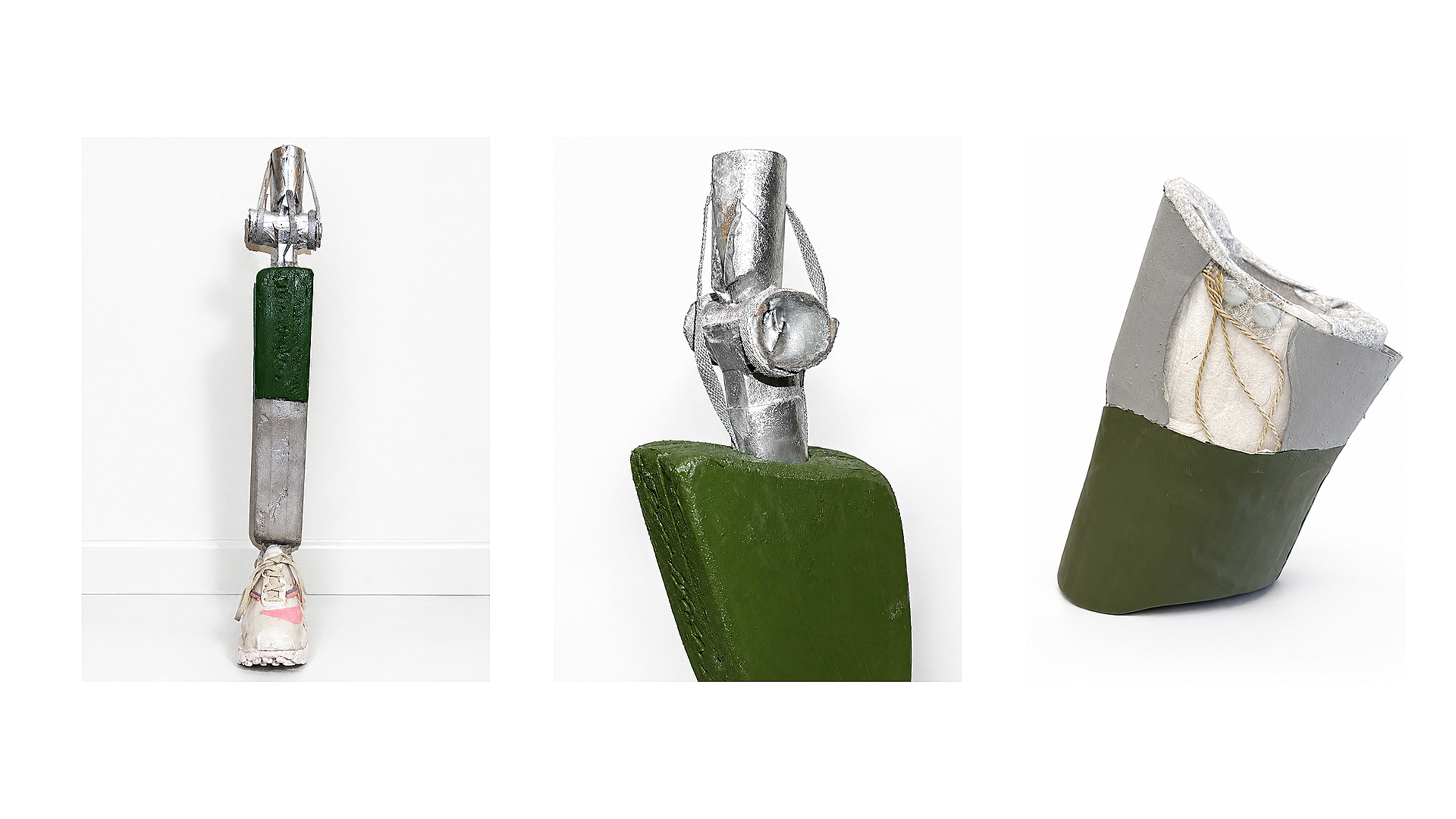
Built physical prototypes to evaluate knee articulation, suspension concepts, socket comfort, and modular construction.
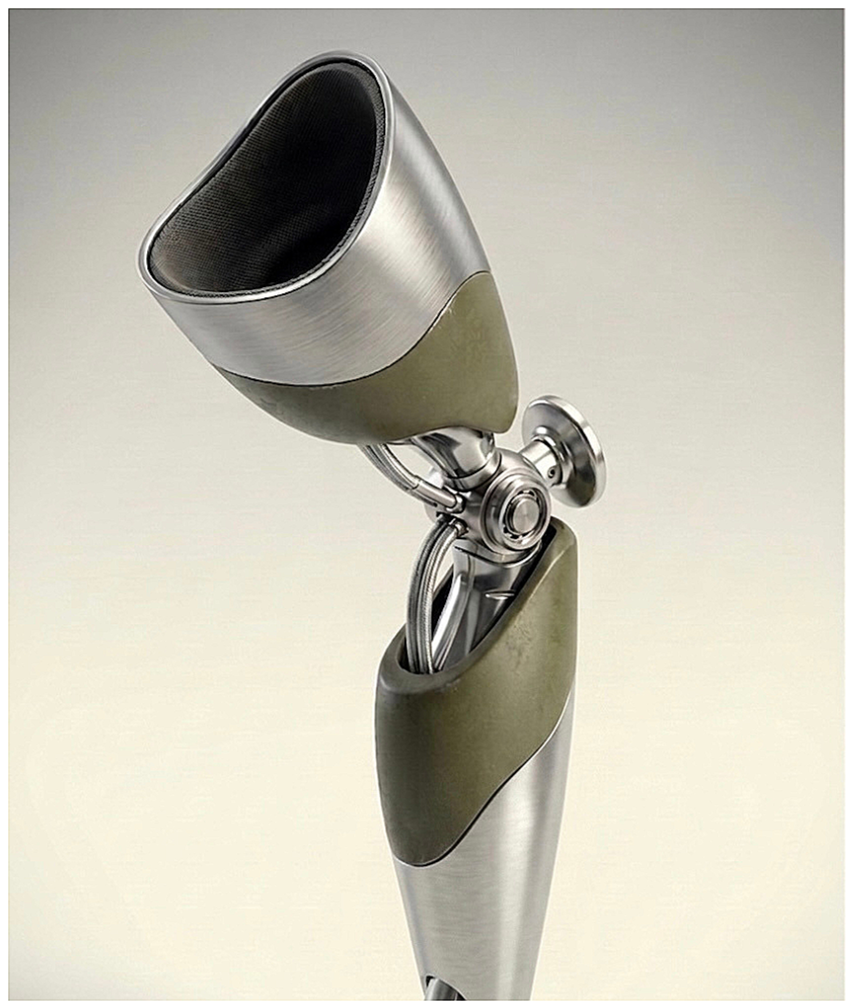
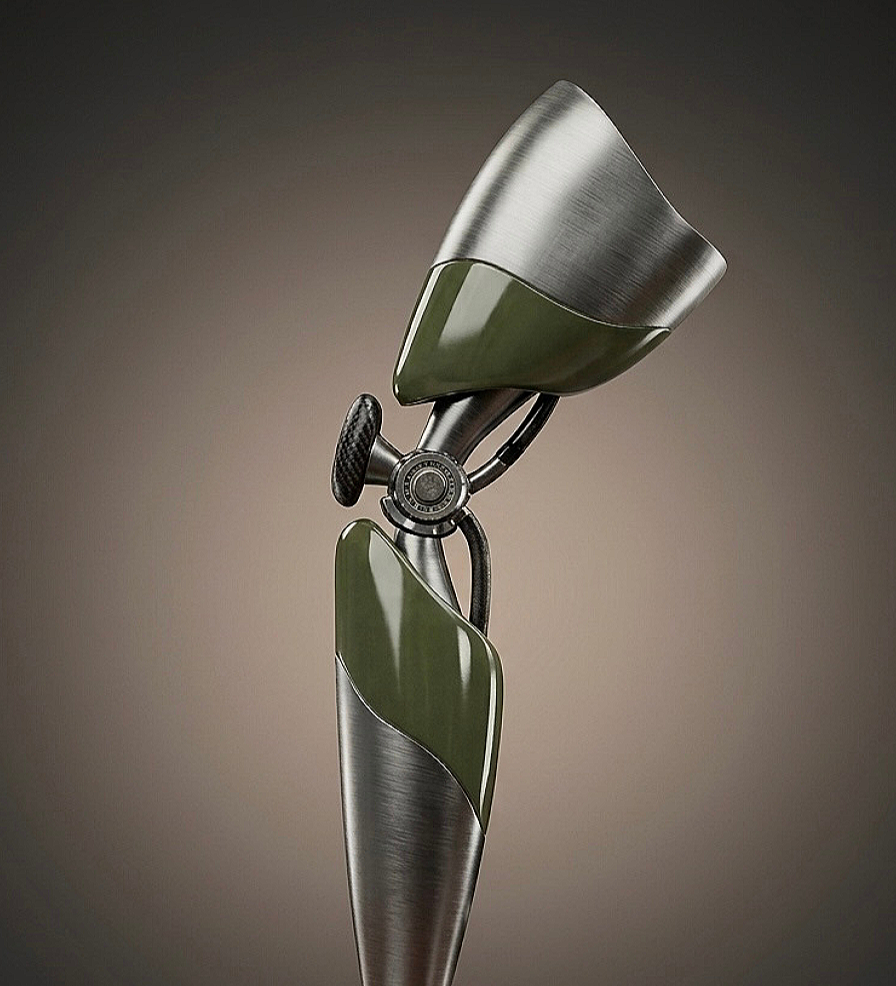
The final concept combines adaptive comfort systems, modular construction, and expressive aesthetics into a prosthetic experience designed to feel less clinical and more integrated into everyday life.
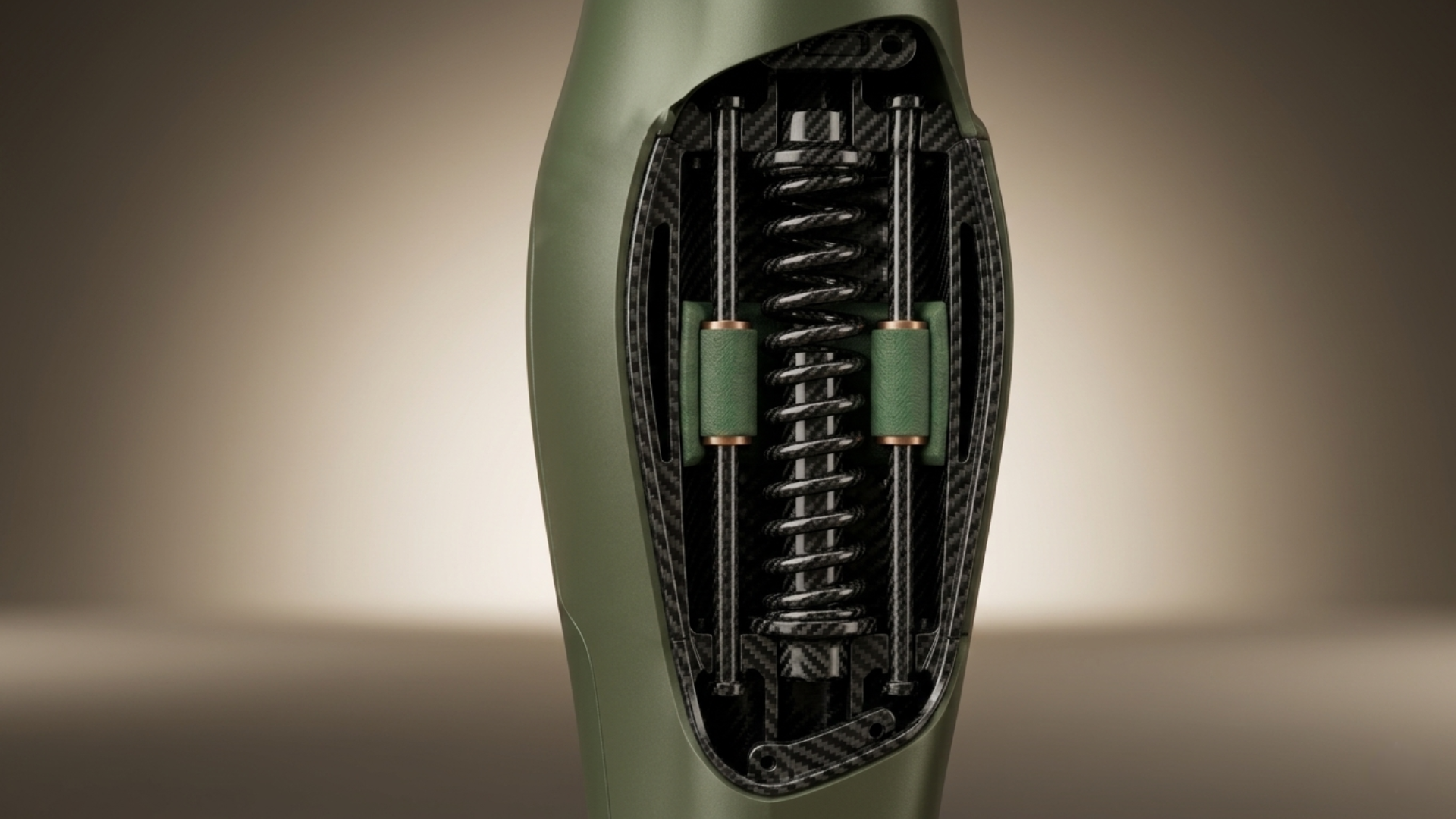
1
2
3
4
Break Down of the Suspension System
(1) Suspension system
(2) Spring
(3) Damping elastomer
(4) Guide rods
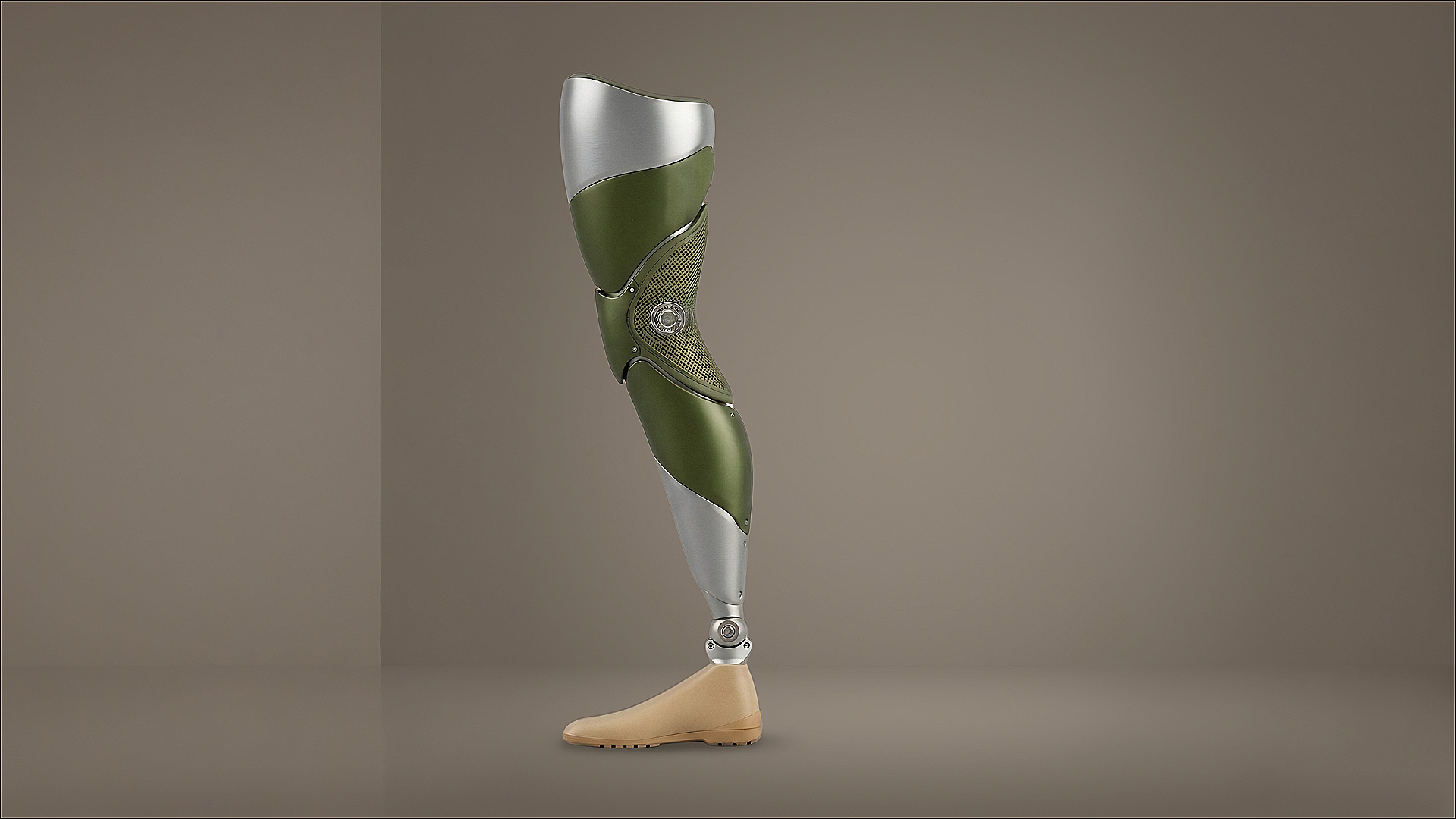
Break Down of Neolimb
Enhanced socket fit
Flexible material to hide mechanisms.
Mechanism imitates the knee joint
Customizable color options
Ankle like behavior for better stability
Flexible foot material for balance
Sensor placement for responsiveness.